NEWS | 10 Dec 2025
The cost of searching
How seeking justice for the disappeared impacts women’s lives
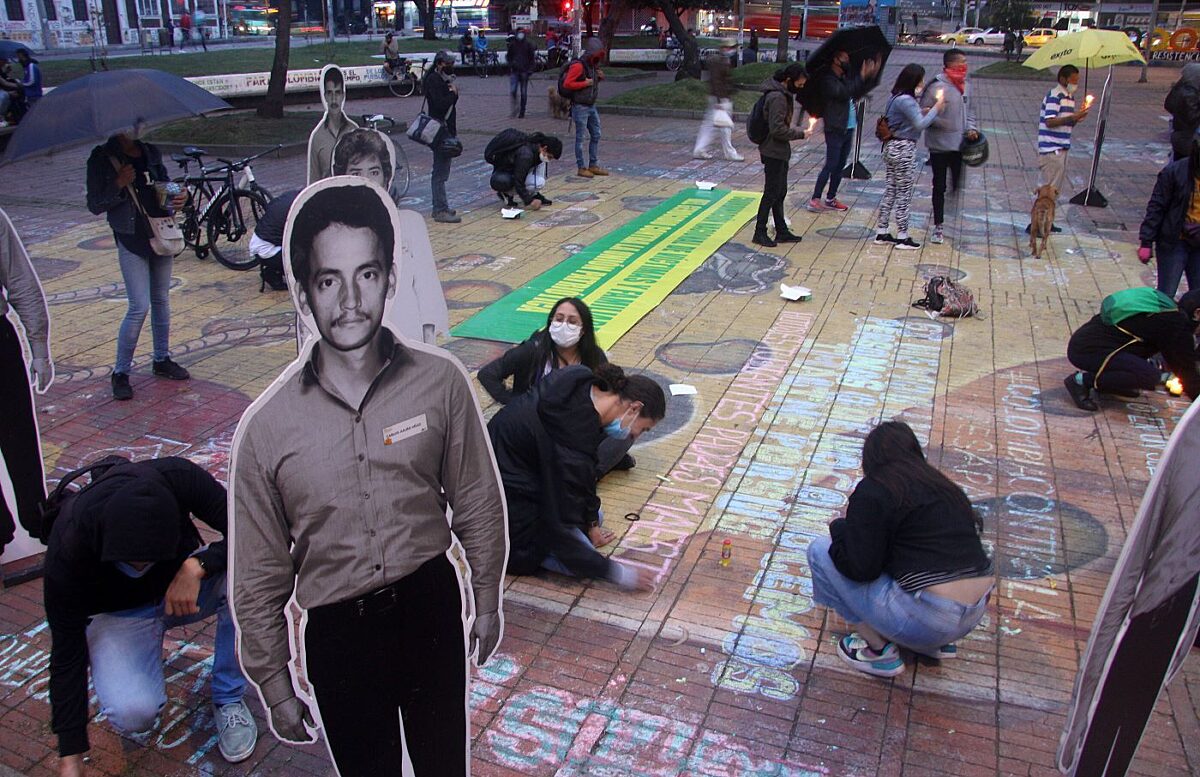
A collection of case studies shows women’s central role in searching for the disappeared and the profound tolls they endure.
Enforced disappearances remain a global problem, altering the lives not only of those who vanish, but also of the loved ones left behind. Most often, it is women who bear the brunt of this absence, who are pushed into poverty, social isolation and psychological trauma by the disappearance of male breadwinners.
For many, the struggle does not end with the initial loss: the years and even decades spent searching for disappeared relatives continue to bring lasting economic and social consequences. At the heart of these search efforts are women, who organise themselves into collectives, create spaces of resistance and memory, and press institutions into action in contexts where states have failed to deliver truth and justice.
New participatory research published by members of the Global Learning Hub for Transitional Justice and Reconciliation documents the experiences of these “women searchers”, as they are often referred to. Case studies on Colombia, Indonesia and Timor-Leste, and Iraq as well as a summary report illustrate how women take on the responsibility of leading search efforts but endure significant social and economic tolls in the process.
Triple workdays
Despite the geographical and cultural distance between the different cases, several common themes arise from the impacts found to be facing the women left behind. Women dedicate countless hours to visiting institutions, filing documents, and travelling to hearings—tasks that amount to unpaid full-time work without recognition or compensation. This prevents them from securing stable employment and entrenches economic precarity. At the same time, their persistence in challenging silence around disappearances frequently alters their social roles, exposing them to stigma, isolation, and labels such as “problematic” or “mad”.
Alongside a summary report, the research project includes three case studies:
- The Social and Economic Impacts on Women Who Search for the Forcibly Disappeared: The Case of Colombia – Paola Molano and Paula Valencia
- In the Shadow of Absence: Women Searching for the Disappeared in Indonesia and Timor-Leste – Arminda Pereira, Galuh Wandita, Jose Luis de Oliveira, Julinta Moreng Bungan, Karen Campbell Nelson, Mulki Makmun, Putri Kanesia and Victoria Tomasia
- The Economic and Social Impacts on Women Who Search for the Disappeared: The Case of Ninewa, Iraq – Rima Salima
Beyond the economic and social toll, the search profoundly impacts women’s health and safety. The uncertainty around disappearances generates chronic stress, depression, and anxiety that can persist for decades. Women searchers often face a “triple workday” of caring for families, sustaining precarious livelihoods, and dedicating themselves to the search, leaving them exhausted and facing declining health as they age. In some cases, search efforts even expose them to harassment and sexual violence, underscoring the profound risks and sacrifices they endure in pursuit of truth and justice.
Towards justice
Across Colombia, Indonesia and Timor-Leste, and Iraq, judicial and institutional mechanisms to support women searchers are frequently poorly designed, lacking in correct implementation, or entirely absent. When developed without the input of those looking for their loved ones, these mechanisms fail to establish lasting change and justice for victims. Instead, meaningful measures must be grounded in the lived realities and priorities of women searchers, recognising them as rightsholders and central actors in the struggle against enforced disappearance.
The case studies provide a series of concrete recommendations for decreasing women’s vulnerabilities. At the core of these recommendations are two core tenets. The first is the need for meaningful institutional acknowledgement of the work of women who search for the forcibly disappeared, which would involve the provision of pensions, salaries, psycho-social services, or scholarships. The second is legislative recognition of the status of enforced disappearance as a grave violation of human rights, including explicit guarantees for the safety of women searchers. Implementing these recommendations would help ease the economic, social, health, and safety costs borne by women searchers, allowing their work to be carried out with greater dignity and support.